Peculiars’ hidden life
Miss Peregrine's Home of Peculiar ChildrenPeculiars’ hidden life is a collective response to a world that has repeatedly rejected and endangered people with unusual abilities. Miss Peregrine describes hiding not as a simple preference for separation but as a means of survival—especially for children whose traits may appear in families with no prior experience of peculiarity. The protected enclaves and time loops created for them offer shelter while imposing a lasting separation from ordinary life.
Persecution and concealment
Peculiars once mixed openly with common folk; in some societies they were treated as shamans or consulted in times of trouble. Miss Peregrine says that a few cultures retain a harmonious relationship with them, including Ambrym in the New Hebrides, where modernity and major religions have not gained a foothold. Across much of the wider world, however, attitudes turned hostile: Muslims drove peculiars out, Christians burned them as witches, and people in Wales and Ireland came to regard them as malevolent faeries or shape-shifting ghosts. Those who remain therefore live in hiding.
That concealment is made more urgent by the unpredictable inheritance of peculiar traits. Abilities may skip a generation—or ten—and peculiar children are usually not born to peculiar parents; conversely, peculiar parents do not reliably have peculiar children. A family with no knowledge of peculiarity may respond to a child's difference with fear and abuse. In earlier centuries, parents sometimes believed that their actual children had been taken and replaced by changelings, and that false belief could serve as a pretext for abandonment or even killing.
Enclaves for young peculiars
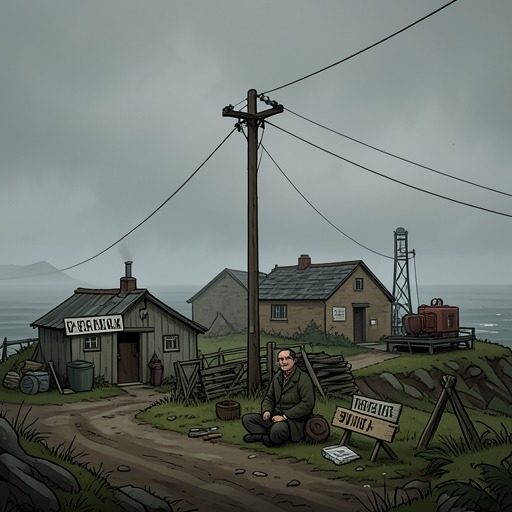
To address the danger facing children, people like Miss Peregrine established places where young peculiars could live apart from common folk. These enclaves are isolated both physically and temporally. Miss Peregrine takes pride in the refuge she helps maintain: its separation answers a specific social threat, protecting children who might otherwise be rejected by the very families responsible for their care.
The protection is organized around peculiar abilities, which Miss Peregrine describes as varied in combination and range. Some, such as mind-reading, are relatively common; others, including her own ability to manipulate time, are rare. The community's hidden life is thus not defined by one shared power, but by the need to make a place for many kinds of difference.
Ymbrynes and the time-loop refuge
Only birds can manipulate time, Miss Peregrine explains, so all time manipulators can take bird form. Most people with this capacity slip through time only occasionally and by accident. Ymbrynes can consciously manipulate time fields for themselves and others, and create temporal loops in which peculiar people may live indefinitely. Miss Peregrine identifies her own refuge as one such loop: the third of September, 1940.
The loop offers shelter, but not an unqualified escape from time. Miss Peregrine says that peculiars remain mortal and that loops merely delay the inevitable. Long-term residents can enter the ongoing present only briefly, lest they wither and die; their safety depends on an irrevocable divorce from that present. Hidden life therefore carries a double condition: it protects peculiars from the hostility of the outside world, while binding its residents to a temporally isolated refuge.